Saturday, May 9, 2015

Lasagna {Using Up Milk}

Using up milk can sometimes be a challenge.  With Charlotte giving almost 4 pounds a day (1/2 gallon), the mason jars quickly fill!  Although I have been drinking as much as I can, I still can't keep up!  So making Lasagna with Ricotta cheese is a great, easy way to use up the milk!  I love it when I can make a recipe with a full gallon of milk, along with many other ingredients that we have available from our little homestead!

Last night I made the Ricotta (See my post about making Ricotta.)  It used a gallon to make about 1 pound of fluffy curd!

This morning I dug out our zucchini lasagna recipe printed off from SkinnyTaste.com (Thanks to my aunt who is frequently inspired by that site's recipes!)

I browned several pounds of beef from our steer.  Yum!

I chopped the onion and a couple cloves of garlic.

I seasoned the meat and onions with some olive oil and salt...

...and some fresh basil!

Next came the crushed tomatoes.

And I let it simmer into a scrumptious sauce!
A bit of Parmesan cheese...

And an egg fresh from the chicken coop...

Made a nice Ricotta mixture.

After grilling the zucchini, I layered all of the ingredients.

And topped with Mozzarella cheese.

Yum!  A nice hardy Lasagna!  Thanks to Charlotte for her milk, the chickens for the egg, and the cows for the beef!  It is fun to live and eat on a farm!

Remember, you may find the full recipe here.

Friday, July 11, 2014

The Effects of Weaning

I mentioned in my last post that I have been weaning Elly May.  It is amazing how this affects Charlotte!


Without Elly May stealing milk, Charlotte's milk production is skyrocketing!  Yesterday, she produced 10 1/2 total pounds of milk.  That is 5 quarts of milk!  I feel like Charlotte is resolving in her goat brain that she doesn't need to hold back milk for Elly May, so she is letting me have it!  Hurray! In fact, Charlotte is even getting reluctant to even let Elly May nurse.  The down side is that Charlotte is producing so much milk that she is getting a bit thin.


Also, the freezer is getting waaaayyy too full of milk jars!  I have scrounged around the kitchen cupboards and filled every single glass jar.


So, I am planning to turn much of the milk into this:
 Chèvre

My first two batches of Chèvre were flops.  The first batch I had a surge of impatience and I squeezed the cheese to drain the whey instead of letting it drip.   It completely messed up the texture (although it smelled great)!  I won't do that again!  The second batch did not form a curd for some reason.  This is the third trial pictured above.  It is "dripping" this morning, so I hope it turns out!

Sunday, July 6, 2014

Update from the Goat Pen

Yep, the goats and I are still around.  However, the goat farmer has been experiencing a whirlwind schedule, which leaves little time for blogging!  Here is an update from the goat pen:

The goats are enjoying frequent scraps from the compost bucket.  Last week, Edna weighed 47 pounds and Elly May weighed 52 pounds!

Edna is now weaned!  Not having to heat up a bottle makes the morning routine go much faster!

I am also trying to wean Elly May.  She is about 15 weeks now, so it is the perfect time to wean.  But look at this picture...She nurses every chance she can get!  Right now, she is separated at night then let out after I milk in the morning.  I pen her up during the day and she takes a "bedtime" sip after the evening milking.  The system is working well.  Without Elly May, Charlotte is producing over 8 pounds (a gallon) of milk a day!

With all of that milk, I am experimenting with some cheeses.  I finally created an excellent curd from the milk.

Here is some feta cheese I made that is aging overnight in a salt-water brine.

I have also been working on getting the goats registered.  I have the paperwork sent in, now I am just waiting for the registrations to be processed!

Until next time...

Tuesday, June 3, 2014

Goat Dress-Up

I was recently cleaning out my closet and realized I had a lot of "dress-up" things stowed away.  With a surge of mischief and imagination, I decided it was time to have a little fun and play dress-up with the goats!

 Tea Time with Elly May
Charlotte--in style!

Edna is ready to rodeo!

Miss Fashion


Love that chevron (and the tongue sticking out of Elly May's mouth)!

I think scarves look good on Edna...


Last picture: Little Goat on the Prairie

Along with the fun pictures, here are the "goat highlights" from the past week:

1) I made goat ice cream for the first time!  The flavor was delicious!  It had a really high melting point, so I need to perfect the recipe to get the ice cream to stay thick (it doesn't help that the temperatures are in the 90's)!

2) I made ricotta again.  This time it was the best time ever, despite the fact that I messed up the recipe!  I was using a different thermometer, so I added the vinegar before it was heated enough.  I realized it wasn't curdling after about 10 minutes, so I just heated it up to the right temperature and the vinegar did it's job then.  I added just a pinch of salt, which made it yummy.  For a gallon of milk, the yield was a little over a pound of cheese.

3) The goat kids are getting their third round of dimethox (coccidiosis prevention).  They get it for five consecutive days, and enjoy the dimethox/agave nectar concoction!

Sunday, May 11, 2014

Ricotta Report!

The past couple of days, Charlotte has consistently milked a half-gallon every morning.  It seemed just perfect to make ricotta cheese with the milk in the fast-filling fridge.  (I had seen the ricotta cheese-making process demonstrated at a class before.  It is one of the most basic cheeses to make, so I thought I would give it a try!)

Typically ricotta cheese is made from the whey left over from making other cheeses.  However, there are numerous recipes for ricotta cheese made from whole milk.  All of the recipes I found online had a little different method.  However, I found a recipe I liked on the Hoegger Farmyard website.  You may find the link here.  I decided to make a half batch to begin with.

 I poured 4 pounds of milk into a stainless steel pan.  The recipe said to heat the milk sloooowwwwly.  I kept the heat on low, and it took over 30 minutes to heat to 190 degrees from the original refrigerator temperature!  In future batches, I will definitely keep the burner a little hotter.

While I waited for the milk to heat, I prepared the cheesecloth.  Butter muslin has a tight weave which is great for draining whey from soft cheeses.  It is 100% cotton and I plan to wash the cloth to reuse over and over.

Just to make sure the muslin was sanitary, I boiled it before pouring my cheese into it.

 Additionally during the process of waiting for the milk to heat, we made pita chips drizzled with olive oil and "herbs de provence."

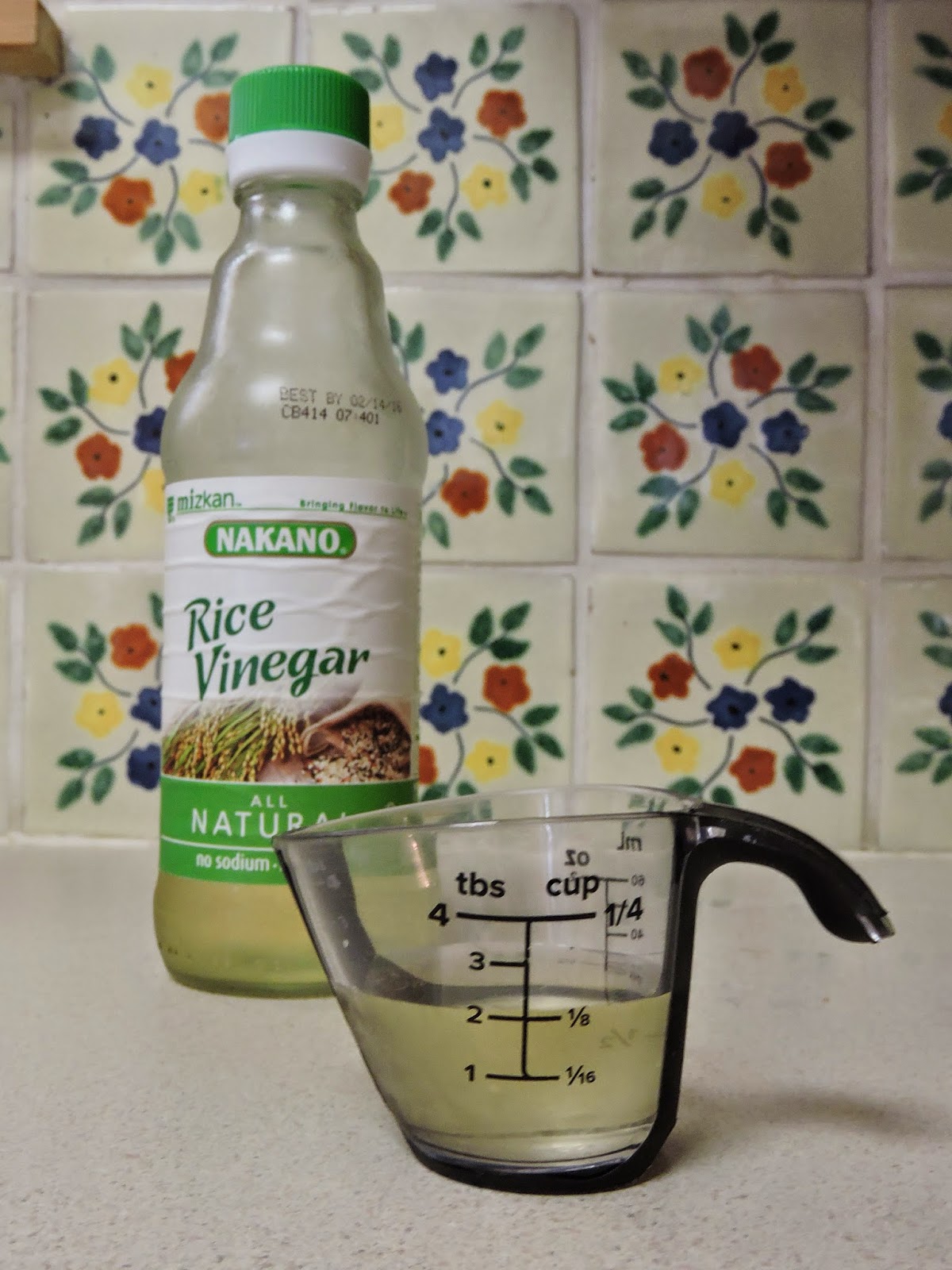
 After the milk was heated to 190 degrees, I poured in 1/8 cup vinegar.  I used rice vinegar because the flavor is milder.  This is to acidify the milk and help the curds to break.

The curds are beginning to form!

I let the curds sit (off the burner) for 10 minutes.  The curds are supposed to be separated from the whey leaving "lemon-juice colored" whey and fluffy white curds.  The whey still seemed a little milky, so I added a tad more vinegar which seemed to help.

I drained the curds into a colander filled with cheese cloth.  At this point, I added a 1/2 teaspoon of baking soda.  From my understanding, this is to balance out the vinegar and stop the acidification process.

The finished cheese was perfectly delightful.  
Delicious!  I made another batch right then-and-there!

Tuesday, May 6, 2014

A Mozzarella Flop!

About 6 months ago, I attended a local cheesemaking class.  The instructor demonstrated how to make goat's milk Ricotta cheese and let me taste a bit of Feta.  I heard about the "New England Cheesemaking Supply" for the first time.  I also learned that goat's milk was key ingredient to having a multitude of yummy cheeses that I could make in my kitchen!  That experience sparked my desire to raise goats...and to make cheese.

"The Recipe" (from cheesemaking.com)

One of core beginner cheese recipes is Ricki Carroll's "30 Minute Mozzarella."  I have made this recipe twice before with pasteurized cow's milk from the store.  Raw goats milk is sure to throw some curve balls (the pH value is not always consistent, etc.), but goat's milk mozzarella cheese is possible to make.  I was determined to try! 

 I measured 8 WHOLE pounds of hard earned milk into a pot!  It seemed like a lot of milk!

Here is the fridge shelf--after I took out the amount for cheese.

 I dissolved some citric acid into a cup of water.  I noticed on the recipe that it said to increase the citric acid when using raw milk.  I didn't read this until after I had poured in the cup of dissolved citric acid.  So, I ended up dumping in a little more "undissolved" citric acid to the milk...(mistake)

Once the milk reached 90 degrees, I added some diluted rennet to the milk.

 I covered the pot and expectantly waited for 5 minutes.  After the waiting, the milk should congeal and the curds be ready to cut. 

To my surprise, I took off the lid and found a pot of milky whey with heavy, clumpy curds at the bottom.  Not what I was expecting!  At this point, I was disappointed and stopped taking photos.  I did attempt the salvage the batch by dumping it into a glass bowl.

I microwaved the bowl to heat the curds and began stretching it (like the recipe calls for).  I stretched and stretched.  It was really stretchy (a good thing)! 

 While I stretched, I sprinkled some of my favorite seasoning into it (However, I forgot the salt!  Ooops!)

 I shaped the cheese into a little ball and plopped it into a bowl and stuck it in the fridge!  I was disappointed that the yield was low and the consistency was off.  It was a mozzarella flop!  However, it was not all in vain because I did learn three very important things:

1) Only make cheese in 1/2 batches until I know what I am doing.
2) Don't forget the salt!
3) Be careful of adding more citric acid.  I read on the mozzarella troubleshooting web-page that my "clumpy curds" problem was likely related to milk with too high acidity.  To fix this problem, I needed to adjust the temperature.  And--adding the extra citric acid just might have been my error!

Despite the difficulties, we did eat the cheese for dinner.  I let it drain in the fridge and it became nice and "hard" (perfect for grating).  I also found it melts nicely.  I am sure that homemade mozzarella will soon be a staple around here!  With more practice and more tweaking, I am excited about making the perfect mozzarella cheese!